Personal Loans Australia :: Articles

5 Credit Killers

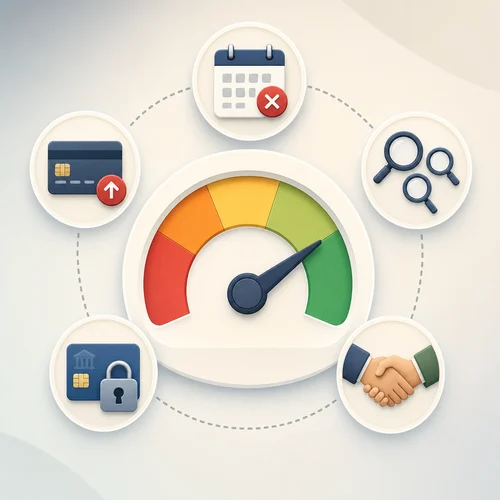
What are the top factors that can damage your credit score?

5 Credit Killers

The information on this website is general in nature and does not take into account your objectives, financial situation, or needs. Consider seeking personal advice from a licensed adviser before acting on any information.

A good credit score speaks volumes about your financial habits. It's the evidence most creditors need to evaluate your credit worthiness.
Interestingly, there are some credit killers that even people maintaining good credit scores would unwittingly be a part of, which will be their undoing when applying for credit facilities in the future.
These mistakes may seem to be insignificant, but when the time comes, you may face more problems than you expect.

Avoiding Debt

Creditors need to evaluate your financial history to approve any credit facilities.
If you have no previous or existing debts, it might adversely affect your case, as creditors have no way of checking out how you'll handle the credit you get from them.

Shopping For Rates

Looking around for the best rate may actually turn out to be bad.
Debt Stressed?
Image for Debt Stressed?If you're struggling to pay your debts and covering living expenses, we're here to help. Through our national panel of Debt Management specialists, we can help customers with $10k or more in debt by consolidating your existing loans, stopping Debt collectors from contacting you and re-negotiating repayments on your terms!
Too many inquiries within a short period could damage your credit score.
Usually, if you do more than 3 or 4 inquiries within a single month, you are likely to scare the lenders. For the same reasons, transferring the balances on your credit cards could be a bad idea as well.

Assuming There's a Grace Period

If you are late on a payment by even one day, you are late, period.
Never assume there's a grace period for late payments, because it only affects your credit score negatively.

Closing Old Accounts

Because your relevant transaction history also gets erased when you close your old accounts, your credit history is shortened and it may lower your credit score.
If you want to close your old accounts, close everything except the oldest account, which will leave a longer history.

Co-signing Loans

The obvious problem here is that the primary borrower's mistakes will end up on your credit report as well.

Published: Sunday, 1st Aug 2021
Author: Paige Estritori


Personal Loans Articles

Your Financial Comeback: Rebuilding Credit Scores for Future Opportunities
In the dynamic landscape of Australian finance, the emphasis on a robust credit score cannot be overstated. A favourable credit score serves as a gatekeeper to a world of financial opportunities, determining the ease with which individuals can access loans, the interest rates they will be eligible for, and even the prospects of securing a home in an ever-competitive market. As the average mortgage sizes surge to unparalleled heights, the significance of maintaining an advantageous credit profile escalates in tandem. - read more
Pre-Approval Loans: How They Work and Why They Matter
A pre-approval loan is an agreement between a lender and a borrower indicating how much the lender is willing to lend to the borrower, subject to certain conditions. - read more
How to Communicate with Lenders During Financial Hardship
Financial hardship occurs when an individual is unable to meet their financial obligations due to a variety of circumstances. This could stem from a loss of income, unexpected expenses, or rising living costs that outweigh financial resources. - read more

Finance News

October 2025 Sees Significant Rise in Australian Household Spending
11 Dec 2025: Paige Estritori
In October 2025, Australian household spending experienced a notable increase of 1.3%, reaching A$78.4 billion. This marks the most substantial monthly rise in nearly two years, as reported by the Australian Bureau of Statistics. The surge was primarily driven by heightened expenditures on clothing, electronics, and hospitality services, spurred by year-end sales events. - read more
APRA's New Cap on High Debt-to-Income Home Loans: What Borrowers Need to Know
11 Dec 2025: Paige Estritori
In a proactive move to address potential risks in the housing market, the Australian Prudential Regulation Authority (APRA) has announced a new policy set to take effect in February 2026. This policy will cap the issuance of high debt-to-income (DTI) home loans at 20% of new lending portfolios for authorized institutions. Specifically, loans where the borrower's debt exceeds six times their income will be subject to this limitation. - read more
Rising Personal Debt Levels Among Australians: Insights from Canstar's 2025 Survey
11 Dec 2025: Paige Estritori
Recent findings from a national survey conducted by financial comparison site Canstar reveal a concerning trend in Australia's personal debt landscape. While the proportion of Australians holding non-property-related personal debt has decreased, those who do carry such debt are facing higher average amounts. In 2025, the average personal debt has risen to $17,634, up from $15,179 in previous years. - read more

Need Help Finding a Loan?
Find out now if you qualify and compare rates, offers and options from multiple lenders - without a credit check!
Loan Amount:
Postcode:

All quotes are provided free and without obligation by a Specialist from our National Broker referral panel. See our Privacy Statement for more details.

All finance quotes are provided free (via our secure server) and without obligation. We respect your privacy.

Knowledgebase
Bridging Finance:
A short-term loan that covers a financial shortfall during time between the purchase of a new property and the sale of an old property.